Friday, December 30, 2011

Omar Abdullah


From the GQ India archive: My interview with Omar Abdullah, the chief minister of Jammu & Kashmir, for the October 2009 cover story. It's also online here.

In the cockpit of his twin-turboprop Beechcraft Kingair 350, Captain Surender Katoch is becoming impatient. He turns to peer down the cabin from behind his gold-rimmed Ray-Ban aviators, looking vaguely disgusted. We’re supposed to be in the air already, but we’ve got stuck in a typical Delhi traffic jam.

“We’re number 13 in the VIP movement,” the 48-year-old Katoch tells us, raising his voice over the radio chatter. “Delhi is a bloody maddening place. Everyone is a VIP, that’s the problem.”

Right now, there aren’t any on this plane. Chief Minister Omar Abdullah and his wife of 15 years, Payal, have sensibly hung back at the terminal building, but the narrow eight-seater cabin is already pretty crowded. There’s Abdullah’s private secretary, Asgar Hussain (an enthusiastic, youthful looking, 37-year-old career bureaucrat), his security chief of 10 years, Mr Shabir (a silent, moustachioed slab of muscle in a safari suit, who looks like he could snap your arm with a discreet cough), photographer Farrokh Chothia, a couple of other anonymous secretaries and myself. Chothia and I are just along for the ride, here to accompany Abdullah to a polo match in a former war zone, the town of Dras in Kargil district, the coldest inhabited place in India.

Hussain has worked for plenty of Kashmiri politicians over the years, but, perhaps not surprisingly, he says he’s particularly keen on his current boss. “He’s very practical, intelligent and quick to make decisions,” he says. “Earlier chief ministers want to wait and watch, and wait and watch, and they can sometimes lose the essence of what’s happening.” The other thing he likes about working for the country’s youngest chief minister is that Abdullah “wants to go out rather than stay home”, and he rattles off an impressive list of outdoor activities, including white-water rafting, riding snowmobiles and cycling. “He’s a very good skier also,” effuses Hussain. “He skis in Gulmarg, and rides his Ducati.”

So, will he be riding a horse in the polo match today, too? “I don’t know,” says Hussain earnestly. “You never know with him – he might.”

As he speaks, a silver Ford Explorer draws up next to the plane, and Hussain quickly hops down the fold-out steps hinged into the fuselage. Out into the hazy August morning steps the 39-year old Abdullah, in a grey suit, white shirt and bright red tie, his cropped hair forming a sharp widow’s peak. Eyes hidden behind narrow rectangular sunglasses, he bears a weirdly nagging resemblance to the sinister Agent Smith from The Matrix.

We follow Hussain down the steps to greet him. Abdullah has been in Delhi for an internal security conference with the PM and state leaders from across the country. How was it? “All right. You can’t do much in a meeting of 30 chief ministers,” he says wryly. “The action is more on the sidelines; a word here, a nod there.” After Hussain’s action-man build-up, Abdullah seems low-key.

We settle into the plane’s butter-soft beige leather seats for take-off, but our wait in the VIP queue drags on even longer. “Every time the president or the PM flies, they close the airspace for 10 or 15 minutes,” says Abdullah. “That’s what this is about.” They’ve become well used to this routine, and the pleasures of travel by private plane. During the week, Payal and their two sons, Zamir and Zahir, are in Delhi, Abdullah is in Srinagar. One weekend he flies down, the next, she and the kids fly up. At last, we get clearance. We are headed first to Kargil, a two-hour flight at around 27,000 feet. Abdullah reaches behind the seat and produces a lunch hamper. He and Payal serve us coffee from a thermos, and pass cheese-and tomato and egg sandwiches around the cabin.

I ask what exactly the polo match we’re going to is all about. “It’s in honour of Lalit Suri, a man who invested heavily in Kashmir. It’s always good to promote normalcy in Jammu & Kashmir. This is the first time we’ve had ‘social polo’.” It’s also an attempt to boost tourism in a region still regarded by many as a war zone, an effort strongly supported by Abdullah’s government. The Lalit Suri Hospitality Group, a major hotel chain, has shipped in some top polo players from Delhi to the town of Dras in Kargil to play a local team. Polo has been a Drassi tradition for over 300 years. The slight snag for the Delhi players? Dras is over 10,000 feet above sea level. “I hope they’ve had time to acclimatize, or they’ll be falling off their horses.”

So, will he be riding today? Hussain, it turns out, will be disappointed. “I prefer things I can control,” Abdullah smiles. “Nine times out of 10, a motorbike will go where I tell it to go, but a horse, I’m not sure about.”

A new breed

Despite the political storms he’s weathered in Kashmir since his election, Abdullah has made good progress in boosting his popularity on the national stage. He is seen as an entirely new type of Indian politician – young, charismatic, well-educated, articulate in English, media-savvy, fluent in the language of business. In a landscape dominated by traditional netas whose outlooks mesh most tightly with India’s working-class majority, pinstripe-suited politicians like Abdullah, Sachin Pilot (who is married to Abdullah’s sister, Sarah), Milind Deora and Rahul Gandhi speak more to the aspirations and tastes of the middle and upper classes. During the run-up to his election in November 2008, Abdullah managed to generate a level of euphoria rarely seen among those kinds of voters. Some of his more excitable supporters even took to calling him “Kashmir’s Obama”.

That’s not a label that Abdullah feels particularly comfortable with. “Expectations are often too high and it has to be tempered by a dose of realism,” he says. “Sudden change doesn’t help. There’s a degree of resistance you have to work with.” And he doesn’t claim to see anything particularly unusual about the new breed of the Indian political animal. “It’s the same generational shift you’d see in any line of work. We’re not hamstrung by the baggage of Partition and colonialism. We’ve seen more of the world. The 70-year-olds started off at large public meetings, where you’d give a long discourse on every subject under the sun. People don’t have the patience now, which is what makes us more suited to the television era. We’re good at giving sound bites.”

He may be a new neta, but Abdullah still owes much to the old school: he is, after all, the scion of a democratic dynasty. In 2002, he effectively inherited the leadership of his party, the National Conference, from his father Farooq, who inherited it from hisfather, Sheikh Mohammed Abdullah, the party’s founder. Abdullah seems to accept this, without embarrassment, as a fact of Indian political life. He sees it as a tool, an advantage that enables him to make a difference. “The biggest thing in politics is name recognition,” he shrugs. But he admits he’s not especially keen on seeing a fourth generation of the dynasty. “I’m hoping they choose to do something different.”

I interrupt to ask how old his sons are, and he momentarily freezes. He looks at Payal.

“Don’t look at me,” she deadpans.“You should know.”

Abdullah is used to gruelling sessions in the state assembly, of course, and recovers swiftly. “Zamir is 12 in October,” he says smoothly, as if pulling the numbers off a policy brief. “Zahir is 10 and a half.”
I ask whom he turns to for advice, apart from his political advisors. “I talk to my dad – he has nothing to gain. I bounce ideas off Payal and get a refreshingly non-political reaction to what would normally be seen through a political prism.”

Does every decision end up being compromised by political considerations? “For the first four-and-a-half years of my government, I’d make the right decision. In the last year-and-a half, I’d probably go for the popular decision.”

I throw in a classic GQ question: What’s your biggest vice? Payal answers for him: “His mum is British, so he has that stiff upper lip. He’s very boring. He doesn’t dance – that’s his vice.”

Abdullah decides to concede this one: “I don’t dance,” he says, mock-embarrassed. “That’s my vice.”

Abdullah, with his confident, precise speech, each word weighed carefully for nuance, has the air of a man who has developed a strong sense of self-belief without letting it cloud his critical faculties. “I grasp what is being explained to me very quickly. I’m a pretty good judge of the people I come across and what it is they want. And I go with an instinctive reaction. I’ve found that when I trust my instincts then nine out of 10 times it’s right. The problem is that people can perceive being quick to decide as being arrogant. But if I can do something in five minutes, there’s no reason why I should do it differently.”

His snap decision on July 28 this year is a case in point. Without warning, Abdullah had been confronted in the J&K state assembly with allegations that he was involved in a long-running
sex trafficking and child abuse case. Abdullah instantly announced he would resign, an unexpected counterpunch that put his opponents on the back foot. “That was instinctive. I knew that if I was going to do my job as I wanted to do it, I’d have to take a stand. People complained that it was a conditional resignation – but why should I give an unconditional resignation when I haven’t done anything?”

It all seems a long way from Abdullah’s youthful intentions to stay out of politics, starting his career as a sales and marketing executive in the hospitality industry. “I really wasn’t enjoying what I was doing,” he says. “People ask me about my change of career, but all I’ve done is gone from selling hotel bookings to selling myself.”

The move felt natural. After all, he had spent his childhood absorbing the basics of a political role, living on the searing edges of his father’s megawatt limelight. It was something that his mother helped him prepare for, even though, he says, she never wanted him to go into politics. “My mum brought us up with the understanding that we were always going to be watched and commented on. We were always going to be judged.”

Dodging bullets

Abdullah tells the pilot to show us more of the landscape we’re passing over, and the plane obligingly banks steeply to the left. Through a plate-sized porthole window, he points out the wriggling switchback trail of the Rohtang Pass. To the right, we pass a series of jagged black-and-brown Himalayan peaks, veined with snow like the fat in cuts of meat. “The glaciers have receded a lot here in the last 10 years,” he says. The conversation turns to some of the environmental problems facing the area, the potential effects of global warming and threats to water security. Abdullah is well versed in the issues, especially the growing pressure on the cross-border sharing of fresh water.

Abdullah is bullish on the prospects for security in Jammu & Kashmir, a topic which is not just of political interest. “I’ve experienced about six or seven attacks,” he says. “The first one, in 2000, was a grenade tossed into a schoolyard just as I was leaving. The second was a rifle grenade, fired at our helicopter as we came in to land.”

After that, the exact order of what happened when gets a little vague. The shock of the attacks has long since worn off; he remembers them now more for what they taught him about managing security issues. “There was one where a land mine went off about 15 feet away, just as I was getting out of the car.” He recalls the unseemly scramble of security personnel after the blast, some of whom fired wildly into the air. “This is the problem with having multiple agencies in your security set-up. They tend to react in different ways.”

The last attempt on his life was in July 2007: a pair of rifle grenades fired at a house where he was meeting with party workers. I ask Payal how she feels about Abdullah taking a job that puts him so squarely in harm’s way. Doesn’t she feel like talking him out of it? “I have tried, many times,” she sighs, looking meaningfully at her husband.

“Don’t squint at me,” Abdullah gently chides her.

“I’m not squinting.”

“It is,” he turns to me, “the subject of a fair amount of discussion.”

Abdullah insists, however, that his personal security is in better shape than that of his predecessors. “There was a time when no CM of Jammu & Kashmir would have given an Independence Day speech without a bulletproof rostrum,” he says, referring to his speech in Srinagar three days earlier. “Now you can do that.” The wry smile acknowledges the meagre comfort in this sign of progress: I can talk inpublic without worrying too much that someone will try to kill me.

Lunar Polo

Around 11am, we touch down at Air Force Station Kargil, a dusty airstrip beneath a jagged range of brown mountains. The only other aircraft here are a Lalit Hospitality Group plane and the blue-and-white Bell 407 helicopter that will take us the remaining 60 kilometres to Dras. Local officials greet Abdullah and his wife with garlands,and escort them up a ragged red carpet for a brief cup of tea inside the terminalbuilding. The pale sky seems harshhere; the air too thin and too bright.

There isn’t room for all of us in the chopper, so Abdullah and Payal go on ahead for the first run. Captain Katoch, still protected by his aviators, takes it upon himself to point out the local sights. He gestures at the mountains. “Some of these ridges are theirs, some are ours. This whole area is within shelling range.” He points north-northeast to a triangular grey peak, hazy in the distance. “That’s a Pakistani forward observation post,” he says.

A Pakistani army officer waits there, ready to call in coordinates for artillery strikes. Katoch, an IAF pilot and the Director of J&K Aviation, wasn’t in Kargil for Operation Vijay Divas in ’99; his war was Sri Lanka. “Kargil was worth it,” he says. “Those guys had to be knocked off.”

After 30 minutes, the chopper is back and Katoch, Hussain and I set off on Abdullah’s trail, swiftly passing over the tin roofs and thin fir trees of Kargil, the shadows of the rotors filling the cabin with a cinematic blur. In the centre of the township sits the bright blue dome of a mosque; this is a predominantly Shia Muslim town, population around 1,20,000, with a sizeable Buddhist minority. Then we’re into a valley between the mountains, high over the fast flowing Suru River, which is bordered by tiny hamlets of mud and stone with roofs of bright orange – a local cottage industry produces dried apricots. The valley walls of cracked, barren rock are so close it seems we could almost reach out and touch them.

They open suddenly into a wide expanse of brown and green, and within moments we’re coming in to land. The journey that has taken us 15 minutes would take 90 minutes by road. Inscribed in fresh white paint on the side of a nearby mountain is a huge battalion insignia and the words: “TENTH ANNIVERSARY OF VIJAY DIVAS 1999-2009”. The summit of the snow-streaked Tiger Hill – site of the bitterest high-altitude combat of the Kargil War – looms 15,000 feet above, like a serrated knifepoint.

By the time we arrive, the polo match is halfway through: horses and riders thunder down the field, hooves scudding dirt for fast turns and hard swings at the ball. Despite the alien 10,000-foot altitude, the Delhi players seem unperturbed by the thin air, blocking often, driving hard into scuffles. Twock! The ball skips rapidly out of one tussle, running down the fi eld to be swept up neatly by a Delhi player in red and white; he gallops it back, knocking as he goes, to fire it square into the Drassi goal.

Cheers and applause erupt from spectators on both sides of the field, at the Vishwanathan Stadium in the heart of the sprawling Dras Indian Army camp. On one side sits a raised dais with seats and couches for local National Conference leaders, army officers and Lalit Suri Hospitality Group executives; on the other, a crowd of over 2,000 villagers – about a fifth of Dras’ population – sit above a low border of piled stones. There is a carnival atmosphere; today has been declared a public holiday in Dras so that the town can watch local players take on the Lalit Group’s Delhi visitors for the first-ever Lalit Suri Exhibition Polo. A chill wind is starting to kick up dust and tug at the canopy over the dais; clouds brood darkly overhead. Still, everyone looks happy.

The good mood of the proceedings goes hand-in-hand with a mild sense of the surreal; a bit like taking afternoon tea at the bottom of the Atlantic. Dras would be regarded as barely inhabitable by much of the world; the temperatures here can drop to below -45 Celsius in winter, when it is assailed by frequent snowstorms. The place seems to promise only a hardscrabble existence. The Vishwanathan Stadium stands at the centre of a stark amphitheatre of grey, implacable mountains, as indifferent to social polo as they are to war. Glance up at them, and it’s like a polo match on the moon.

The Dras team, drawn from the best players among the town’s six teams, fight hard, and for a while it looks like they will hold the Lalit team to a 2-2 draw. But the Delhiites manage to break through once more, pulling off a 3-2 victory.

The townspeople are courteous in defeat, applauding heartily. “They’re being good hosts,” Jyotsna Suri tells Abdullah on the dais. “They let the visitors win.” She is Lalit Suri’s widow, and chair and managing director of the Lalit Suri Hospitality Group. The match is her baby, the first of a series of annual polo tournaments to attract tourists to the state. Abdullah, leaning back in his Agent Smith shades, breaks into a grin: just for today, everybody wins.

Somewhere along the way, Abdulla has changed for the event into traditional Ladakhi formalwear, a fl owing brown goncha tied with a green sash. As he steps down from the dais for the postmatch ceremony, you can see that it doesn’t quite go with his black brogues and blue polka-dot socks. The players dismount and line up side-by-side by a table with an impressive gold trophy. The suave, well-built Delhi victors, captained by polo professional Jai Shergill, tower over their wiry, ruddy-faced Drassi counterparts, who good-naturedly collect their awards from Abdullah and Suri. Shergill lifts up his trophy and gives it a passionate kiss.

Abdullah is invited to return to the dais to make a speech. He addresses them in Urdu, his voice booming across the field through a PA system. He thanks the Drassis for their support 10 years ago. “Once, this place was famous for war,” he says. “Now, it should be famous for sports like polo.” He says that past governments have not taken care of the area – but that will change. He wants the private sector to help develop it, and promises the creation of a local tourism development agency – this gets a loud cheer – plus a short list of improvements: computers in schools, electricity in every home, the technologies “needed for the 21st century”. As he speaks, the wind suddenly picks up, whipping up a large dust cloud from the polo field. Above his head, the canopy shakes violently.

He finishes with the mandatory list of thank-yous, before diving gamely into a decent-sized media scrum with assorted national and local news channels and papers. The first question everyone wants answered is: what will happen in the Shopian murders investigation? He assures CNN-IBN that “the chapter will not be closed” on the case, before deftly moving on to sunnier messages, like “corporate India has finally reached Dras” and “Dras is now on the map”. He hopes that in future years of the tournament, Manipuri players, even international polo players, will take part.

“And next time, will you get on a horse?” asks a young female reporter sternly, almost as if she feels a little cheated.

Abdullah looks momentarily at a loss for a positive answer.

“Er… I will seriously consider that possibility.”

Saturday, May 14, 2011

An Open Letter to Bobby Jindal

From the September 2010 issue of GQ India magazine:

Dear Governor Bobby Jindal,

Mind if we call you Piyush? Still can’t get used to the “Bobby” thing.

Hail from the motherland! Your cousins in the old country (that would be us) wanted to drop you a note on your extraordinary adventures in the New World.

We've been reading about you ever since you got elected, in 2007, as the first-ever Indian-American state governor. Wow, you were exciting. You’d been conceived in India, but you popped out on American soil like you’d crash-landed in a spaceship from Krypton. Ka-pow! You were a Rhodes scholar and a graduate of Oxford and Brown. Whoosh! At 24, you were running the Louisiana Department of Health and Hospitals like a Swiss watch. Zap! At 34, you were elected to Congress with 78 per cent of the vote. Bamm! At 36, you’d won the Louisiana governorship in a landslide.

As governor, you got a reputation for being tough on corruption and self-indulgent politicians. Hey, we started to think, we could use some of that. Maybe Piyush’s mum and dad should have done us a favour and stayed home.

People called you the Republican Obama; said you should have been McCain's running mate in 2008. One day, you could be President ofthe United States. You were young, cool and dynamic – and you were brown, baby.

And then you started to seem a bit weird.

It’s hard to pin down exactly when Bizarro Bobby first appeared. Was it February 2009, during the speech you gave in response to President Obama’s budget that was supposed to launch you as a Republican leader? You know, that speech in which you told Americans seven times that they could do anything (except hope a Republican federal government would spend money fixing the economy or deal successfully with a natural disaster).

Americans took part of your message to heart - they could do anything (except give your speech more than a 15 per cent approval rating). We admit, discovering that your oratorial skills make George W Bush sound eloquent was a bit of a blow. Even fellow conservatives called you “animatronic", “uninspired” and “cheesy”.

But we reckon some of your weirdness came more from other areas, like your belief that creationism should be taught in science class, that abortion should be illegal, that they should build a giant fence along the border to keep out the Mexicans, or, as you just signed into law a couple of months ago, that people in Louisiana should have the right to take guns into church.

We haven’t checked the Book of Matthew, Piyush, but we’re pretty sure it doesn’t say: “Whoever smites thee on thy right cheek, turn to him and blow the motherf***er’s brains out.”

But perhaps the weirdness goes back much further. Let’s face it: When a four-year-old child decides to call himself Bobby after a character he’s seen in a Seventies American sitcom called The Brady Bunch, it’s Cute. When he's still doing it at the age of 39, it’s weird.

Remember that if-only-you’d-stayed-in-India idea? In retrospect, we’d be happy to have bought the tickets.

God Bless America,
GQ India

Saturday, July 31, 2010

Dear Next Mrs Mahajan

Rahul Mahajan has allegedly beaten his reality TV wife Dimpy Ganguly (yes, she's called Dimpy, but that's no reason to beat her up). The fact that Rahul Mahajan is a popular figure in the first place speaks volumes about the mental state of Indian popular culture. "This has left us shocked. They had just got married. This was not expected," said Sameer Nair, CEO of NDTV Imagine, the channel that birthed this abomination. Au contraire, Mr Nair; many of us had imagined the horrors that might follow. Here's my Open Letter to the then-unknown Next Mrs Mahajan, published in GQ India's December 2009 issue.


Dear Next Mrs Rahul Mahajan

We thought we’d drop you a note, even though we have absolutely no idea who you are – you could be any one of the around 17,000 women who have applied to be contestants on Rahul Dulhaniya Le Jayega, the reality TV show that this month will find Rahul Mahajan his new wife.

We hear that women from all over the country and all walks of life have applied, from doctors to engineers and even prisoners in Bhopal Central Jail, including 25-year-old Seema, a convicted murderer, and Sunita, undertrial in a drug case. Sadly, the jail won’t let them out for TV appearances.

All the better for you, Next Mrs Mahajan – congratulations! Rahul’s quite a catch, isn’t he?

Now, don’t be nervous about the whole getting-married-on-TV thing. Rahul, we’re sure, will be a great source of comfort and reassurance – after all, he has a lot of experience in this area. In 2006, he married Shweta Singh even while he was in the middle of a massive media storm over that drug overdose and arrest for cocaine possession. Last year, he proposed to ex-gangster’s moll Monica Bedi live on Bigg Boss 2. The third time’s got to be the charm.

Just forget about the cameras – the most important thing is the authentic, loving bond that you and Rahul will have established over a series of high-TRP episodes. Once the cameras stop rolling, we’re sure Rahul will be a committed and adoring husband. Just look at his face – aren’t those squeezable little chipmunk cheeks just bursting with love? As he said so tenderly, in an NDTV Imagine press release: “I’m looking forward to finding my life partner with whom I can begin a new journey.”

OK, yes – his journey with Sweta turned out to be a short one. But we’re sure those stories about him beating her up were baseless exaggerations. After all, Sweta’s application for divorce, filed just 15 months after they tied the knot, was later agreed by mutual consent – so, really, Next Mrs Mahajan, nothing to worry about there.

Whatever niggling reservations you may have, just put them aside and focus on the thought of the prestigious, well-connected family you’ll be marrying into: Rahul is the son of a powerful political leader. Alright, yes, there is a downside here too – the fact that his uncle Pravin shot his father to death is obviously disturbing and upsetting. But please don’t get the idea that there might be something dysfunctional about the family. Have a heart, Next Mrs Mahajan.

Anyway, we wish you a lifetime of love and happiness. Whoever you are, we’re sure you’ll be very nearly a perfect match for Rahul. The perfect matches, unfortunately, are all locked up in Bhopal Central Jail.

Happily ever after,
GQ India

Friday, May 07, 2010

Brain teaser


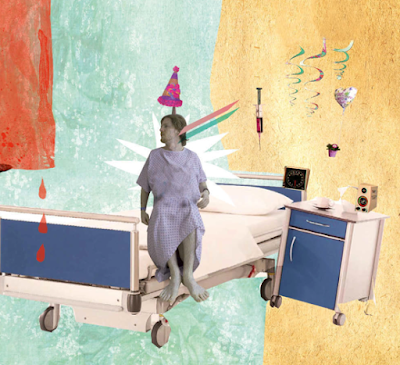
Having now spent every day since January 5th 2010 renovating my brain - really, you should have seen the state of the place last year - it seems appropriate to blow the dust off this blog.

I now have an interesting new scar, punk hairdo and weird suntan, all from a prolonged run-in with a Chondroblastoma tumour that was drilling into my left temporal lobe with all the finesse of a BP oil platform. Then I was assaulted by a guy with a knife (fortunately he turned out to be a neurosurgeon) and was then baked daily in a Tomotherapy radiation machine that smelled like fried ear wax. For six weeks.

During all this, I've become a great admirer of Indian medical science. In Mumbai I've been fortunate enough to have been treated by the most tremendously capable, clever, skillful, motivated, caring and reasonably priced people I have ever encountered.

And I am now totally sick of them.

Be fair - it's now been over four months of them poking, scanning, slicing, bandaging, medicating, irradiating and saying "How are you feeling?". Having just finished the radiation therapy I'm really hoping never to have to spend time with any of them ever again. Which is not going to happen because I already have my next appointment for July 20.

Anyway, I would rather be telling you about some of the more interesting stuff you can be looking at on this blog, which includes some of the work I've been writing for Indian newspapers and magazines since my arrival in Mumbai in 2002. Let's start off with some open letters I've written for GQ.

Saturday, March 27, 2010

Final Bow

Language can unravel like an old curtain
From the bottom up.
But it can be a tricky job
To get the metaphors unfolded and left open
And unstitch adjectives from nouns
With all those leftover verbs tangled in a pile
Of comings and doings.
Some nouns rip out easily, though,
If you leave them for a while.
Especially the names.

But if you prefer, you can strike a match on the stubble on your temple,
And watch them all burn.

You’ll find the matches in that thing,
In that piece of wood beside what you still remember to be a bed.
In the place you call a hotel, because it begins with H and ends with L.

Words don’t glow before they turn black.
There are no eloquent farewells.
They just drop, in a panic.
Don’t bother looking for them
Or you’ll miss the others
Falling.

Wednesday, August 02, 2006

Ceasefire now

The editors of Time Out Beirut and Time Out Tel Aviv give their takes on the war in Lebanon in the latest edition of Time Out Mumbai.

Please support this campaign urging for an immediate ceasefire.

You might also like to write an email to British Prime Minister Tony Blair telling him how morally bankrupt he is.

Thursday, July 20, 2006

Prophecy, Amateurphecy

It occurs to me that if Maheshji was wrong about Germany winning the world cup, then his other prophecy about me winning a journalism award is probably also up the spout.

Typical.

Wednesday, July 19, 2006

Ban to be lifted

Manish Vij at Ultrabrown.com reports that the blog ban has finally been publicly addressed by the Indian government and will be reversed shortly. Apparently, it's all the ISPs' fault, not theirs.

R-i-ight.

Those terrorist-blogging scum

More on the Indian blog ban from the Indian Express.

Apparently, the Ministry of Telecommunications wanted to ban a blog called princesskimberly.blogspot.com but was informed by its technical folks that single blogspot pages could not be blocked. The solution? Block every single blogspot site.

I think that's what's known as a nuclear response. But at least we can feel rest assured that the government has decided to stand firm in the face of terrorists who use the internet to communicate. An examination of princesskimberly.blogspot.com via the pkblogs proxy (at www.pkblogs.com/princesskimberly) reveals the truly evil nature of these terrorist-blogging scum.

Entitled 'Dreamer' (of what, we wonder? Taliban-style dictatorship for India, no doubt), the blog is orchestrated by a shadowy mastermind known only as "Kimi" (a barely concealed reference to SIMI - the Students' Islamic Movement of India) and is written in code, but is clearly designed to stoke religious hatred. In a post entitled "Who has the most boring life ever? I do!" 'Kimi' unleashes the following bigotry-filled screed:
So, yes.. My life is extremely boring! Nothing too exciting to post today.
The 2nd 1/2 of my spring break was a lot of fun.. I went and stayed w/
Stopher and his family in Houston. Went to Galveston to the beach and rode the ferry. Went to the rodeo and saw Pat Green. Then stood around at a family gathering that his mom's side of the family had. It was like a senior citizen convention. Break out the dominoes and pour some beer! Anyway, good times! I went back to Arlington on Sunday to eat dinner w/ Melbany.. IHOP.. yummy! :) Made it to class this week.. 2 days in a row. Go Kim! Anyway.. Nothing exciting happening now. I just got done kicking Stopher's ass at Solitaire Showdown. But when do I not? :) j/k. I've got a huge test to study for so I'm out!
Peace, Love, and Salsa.

"Spring break" is undoubtedly a reference to a secret meeting of like-minded terrorist scum, at a hidden location with the codename "Galveston". Kimi's instruction to "break out the dominoes and pour some beer!" is clearly an order to the terrorists to recover hidden caches of RDX explosive and AK-47s in preparation for "kicking Stopher's (India's) ass". And even a child can see that "Peace, Love and Salsa" is some sort of coded Islamist salutation along the lines of "Salaam Alekum".

Evil. Pure evil.

Thanks for defending us, Ministry of Telecommunications!

Plug socket II


Have finally seen the pre-release version of the Time Out Mumbai & Goa city guide, which will be going on sale soon. It looks great!

Go on, buy it.